11/29/11

Frame Restoration

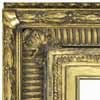
I haven't talked much of frame restoration, but there was a question about courses in frame restoration on the Grumble, and I thought I should post my reply here. It has always been a part of what I do. I don't do puzzles but I remember spending several hard days piecing back together hundreds and hundreds of broken frame ornaments from an early 19th. c. mirror frame. It was both challenging and enjoyable. Most restorations don't involve a lot of replacement ornaments, as the example above, though quite a few involve regilding.

 "The hard part is gilding and there are classes and workshops offered here and there. Smooth-On and their distributor, Reynolds AM, offer both the materials and knowledge on how to use various casting and molding supplies. There are a few books on frames available now, including this which covers methods. "The Encyclopedia of Picture Framing Techniques: A Comprehensive Visual Guide to Traditional and Contemporary Techniques". There have also been reprints of the two classic books on ornament, "The Encyclopedia of Ornament" and "The Grammar of Ornament". Once there is some feel for the language of ornament, it is possible to reconstruct missing ornaments when there are only fragments left. Basic knowledge of woodworking, carving and some modeling skills are all helpful."

The frame above, showing the bole on some replacement ornaments, prior to water gilding. The frame is from the Albert Milch Co., New York, and is a fine example of the "Art of Framing"; beautifully ornamented and water gilt, with extensive burnishing.

11/19/11

This Day

Abraham Lincoln, by Daniel Chester French, Sculptor
Lincoln Memorial, Washington D.C.

Today, November 19th., in 1863, President Abraham Lincoln delivers his brief remarks, The Gettysburg Address, at the dedication of the National Cemetery in Gettysburg, Pennsylvania.

The "Address" is famous for it's succinct summation of the war.

The battle is controversial as to whether it was the turning point, ( No, Antietam ), or was it the "high-water mark" for the confederacy. ( Yes ). Though the war would bloodily stagger on for almost two more years, it was the last time the confederacy had the men and material to actually win the war, and after Antietam, world opinion seemed unwilling to support slavery, thus losing the political war.

Contrary to Robert E. Lee's "Old War Horse", James Longstreet, I believe Lee had a very good plan, which was why he was willing to take the offensive against a good defensive position. Unfortunately, JEB Stuart, and his troopers, seems to have been "tired" from gallivanting around gathering glory, and were stopped by a ferocious little "Wolverine", George Armstrong Custer, preventing Stuart from getting into the rear of the Union lines. Had he done so, the outcome of the battle may have been far different. There are markers for the "high-water mark", commemorating a Lieutenant Alonzo Cushing, and General Lewis Armisted, who were mortally wounded at the farthest breach of the union lines.

At Gettysburg, Lee and Longstreet seem to have been at "odds", though I think the south has been negligent in it's appreciation for one of Lee's very trusted lieutenants, "Old Pete", "Lee's Old Warhorse", who had his bad days, as do we all. Fairly recently, there has been an Equestrian statue erected at the battle field at Gettysburg; seems it took a while, but better late ...

11/15/11

Fog

This morning, chill, damp and foggy.

Today, in 1864, Arch-villain or war hero, William Tecumseh Sherman begins "The March to the Sea', abandoning his supply lines while in enemy territory, and unusual for that era, a winter campaign.

Civil war reading; about the one year, and selected individuals, including Major Robert Anderson, of Fort Sumter fame, and Colonel Elmer Ellsworth, leader of the New York Fire Zouaves. Ellsworth was the first well known death in the Civil War. In Danville, Illinois, I lived once, on the bluff above the North Fork of the Big Vermilion River, and just down stream from Ellsworth Park. His name has graced much since his early death. Danville is the county seat, and was a part of the law circuit that Abraham Lincoln traveled as a prairie lawyer. Danville is where I developed a taste for reading county histories, variable from all the excitement of the best thriller, to the sleep inducing quality of watching paint dry.

11/10/11

The Morning Dog Walk


Sun up and frost on the leaves, and talk of snow later in the day. Later, a post on one of my current projects; counter tops made from ... bowling alleys.

11/5/11

No Comments

Some Jack-o-lanterns, though Halloween has passed. I got distracted whilst doing the previous post, and failed to mention that I've turned off comments for a variety of reasons, with probably the most important being that a lot of what I write is in the form of brief essays, and are not part of a conversation. If you would like a conversation or have questions, please email me; the link is posted.

Bron

11/3/11

More monochrome, arcane minutiae

The start of a sketch, a riverine landscape, on my drafting table that I use for sketching and painting. I was working with my Pelikan pen, Richard Binder nib, Noodlers ink, on Strathmore plate Bristol, when the gentleman who sold me the pen, called me on my picture viewer to discuss some frames. ( I'm using my iPhone as a picture viewer ) I work from photos, as I have children, dogs, old houses, cats, leaky studios, and old vehicles all requiring some attention, not to mention the occasional customer. Looking forward to when one of the kids gets an iPad, so I can borrow it.

The sketch is where I rough out the general composition, the sweep and flow. This will, if I make a painting from it, will be planar, horizontally, of a plain, undramatic landscape. I seem to enjoy a certain undramatic scene.

Photos are a start; I'm not trying to duplicate the photo, and I often combine elements, as I'm trying for a feeling of place and time, and the emotive qualities of a plain and simple landscape ...  the above may be a touch too dramatic. It's not that I can't be dramatic ... just my best stuff seems of the ordinary.

10/14/11

Monochrome

Over on TOP, there has been a lengthy discussion on the subject of a B&W only digital camera, with quite a bit of technical nuance and minutia; and frankly I didn't get it until the third post on the subject, where it really got into the minutia. My "ahh-hah" moment was realizing that I have always done a certain amount of work in monochrome; only not always photographically ...


My monochrome, black and white, tools of choice; Strathmore Bristol board, plate, or smooth finish, and one of the two fountain pens I use for sketching, filled with Noodlers "Heart of Darkness" black ink (In photo). The pen above, a Parker Vacumatic, circa 1935, with a nice nib. My other sketcher is a Pelikan from the late eighties, with a custom, very flexible nib, from Richard Binder.

Enough arcane minutia?

These sketches are seldom seen, as only occasionally will I do proposal sketches in pen and ink. It is personal work, enjoyable for the discipline of all lines are permanent, and the "grays" require some effort.

I have avoided making this a lecture on pen and ink, the dip pen nibs in their hundreds of variety's, the holders, the actual quills and reeds, and the multitudes of ink ... what you see above is the culmination of a practice I started in my late pre-teens.

Bron


9/27/11

Walnut wood

 
Two Legged Rocker, Black Walnut

The above is an example of furniture made from the "King" of American cabinet woods, Black Walnut. The wood carves beautifully, finishes very well, and has a lovely , warm color. Working it can , however, stain the hands, and in fact strong dyes have been extracted from walnuts and their cousin, Butternut. Butternut was a very common dye in antebellum America, that during the Civil War, enough of the Confederacy's uniforms were dyed with butternut dye, that the troops became known as "Butternuts". Walnut ranges from a milk chocolate to a dark chocolate, and will have a purple hue in air dried lumber, as opposed to kiln dried lumber.

A corner of the studio, with some miscellaneous wood; birds eye maple, some knotty pine, some oak, some mahogany from a dismantled piece of furniture, and some walnut planks, and a walnut frame eventually to be a mirror.
In earlier times, the walnut was prized for the nuts, while the wood was a utilitarian material; used for fence rails, rail road ties, and I've seen a house in east-central Illinois, that was all framed in walnut. The nuts are still collected, prized for their rich, and distinctive flavor, though it is a difficult process. There are tools, nineteenth c., hand cranked, for the removal of the hull from the nut, but we moderns seldom want to work that hard.


A picture of a fresh nut in it's husk, one that has the husk mostly rotted off, and the nut after being ravaged by squirrels. This has been a good year for the two walnuts in my back yard; the "thump-thump---thump,thump,thump" of nuts smacking on the studio roof has been going on for a few weeks, followed by the skittering sound of the industrious squirrels, who are busy chewing off the hulls and burying the nuts.


Top, the big walnut, and bottom, an example of the "trashed" state of my backyard. It is, in fact dangerous to walk in our backyard now, as it is very easy to twist an ankle from stepping on a walnut, and if the hull is getting soft, you can slip. And the leaves and hulls are toxic to other plants, and kill many other plants in the back yard. Usually the squirrels do a pretty good job of keeping them under control, but this year, a big crop, and then there are some little Pine squirrels running around, and I am told they are very aggressive with the bigger gray and fox squirrels.

I'm tolerant of the walnut mess, because I have an appreciation for the wood, the nuts, and their interaction with the history of our country, though I do not avail myself of the nuts at my feet. It's a time factor.

9/26/11

The Very Littlest Dragon


 Frame, courtesy Baer Charlton, Art,  Laura Reynolds.


This is one of the rewards for the revamped Kickstarter project mentioned below, and repeated here.

The very first novel about a picture framing shop, really. The book was written by Baer Charlton, published photo journalist for over 20 years, professional picture framer for over 40 years, multi-medium artist since diapers, and illustrated by Laura Reynolds, a terrific sci/fi and fantasy artist. They are doing a Kick Starter project to fund the publication and distribution of the book, here. They need some help, so check it out.

Kick Starter is an All or Nothing method of funding creative projects, involving pledges of support and rewards for your pledge. Projects range from Art to inventions, books, films; anything creative that needs a little "Kick".

9/20/11

Regular programming. On Wood


Above, two boards of basswood in the rough.  Below, a planed board, showing the very subtle pattern. For carved frames that are going to be finished, basswood is my preferred wood, as it mills readily and carves with and across the grain easily. It does not dull tools, and only occasionally is the wood "difficult". The Wikipedia article.

I've carved from walnut, oak, mahogany, maple, ash, hickory, butternut, and they all have worthy attributes, but for finished picture frames, basswood is supreme. It can also be clear finished, having a subtle but distinctive look. Much of the work of the celebrated English/Dutch carver, Grinling Gibbons is carved from basswood, or lime, as it is known in England.

The wood is useful as a secondary cabinet wood; its flowers produce a high grade honey; basswood is considered to have medicinal qualities, and the name "bass" is derived from "bast", a product of the inner bark, which native Americans used to make rope.

It is a large tree, growing wild and as a cultivated street tree.

Addenda: A large basswood in the tree lawn a block over from my home.


9/17/11


Civil War Monument, Cassopolis, Michigan

Today, September 17th. the bloodiest single day of the American Civil War, Antietam, or Sharpsburg. Tactically inconclusive, though considered a Federal strategic victory, it led to President Abraham Lincoln's announcement of the Emancipation Proclamation.


On September 22, 1862, Lincoln announced that he would issue a formal emancipation of all slaves in any state of the Confederate States of America that did not return to Union control by January 1, 1863. This effectively ended Confederate hopes of a European intervention.

9/13/11

She's back!

This is a photo from 2 years ago, but  "Victory" is back atop The Soldiers and Sailors Monument in Indianapolis. More, here, at Indy Star.

And, in the "how quickly we move on to really important stuff ...", the news this morning was all atwitter about Madonna having "dissed" one of her fans over some flowers. PFUI.

9/10/11

Kickstater redux.

Cover, courtesy Baer Charlton, Laura Reynolds.
This project didn't reach it's funding goals but there is a lot of interest in it still; soon, hopefully there will be more news, including some alternate methods of publishing.