

First, a clever idea for holding a lighter camera. A finger strap. Never heard of them, but with the a6000, and the finger strap over my right, middle finger, the camera is secure, and very usable, without really having a grip on the camera. It's wedged in, and very movable, but secure. I like them far more than wrist straps. In the above image, the one on the camera is a cut off neck strap; beside it a paracord one using a "friendship" aka a "diamond,"or "lanyard" knot. Very simple and easy to remove, as the loop just slides through the strap ring, and is held between the knot and the finger.
Complaints about the camera are few, and minor, such as the SD card is difficult to remove, as it is tight to the card and battery door. Turn off wireless, through airplane mode, if you're not using it, as it quickly depletes batteries.
Hi-speed drive mood is fast enough to shoot five frames with one quick shutter depression, two frames in mid, and one in low.
I was unhappy with face recognition; it kept focusing on the wrong face. However, one can register faces for the camera to focus on, and arrange those registered faces in the order of preference. Next time.
I've mentioned the three memory slots for custom settings which are great. There is also an app for smart phones that allows the phone to be a wireless control for the camera, including remote shutter release. However, it doesn't seem to work when the camera is in memory settings mode. Either I'm too dumb to figure it out, or Sony needs to write that into a firmware update. Memory mode is one of the times remote relase is useful.
Very pleased with the two lenses, 16-50, and 55-210, noting that they are "kit" lenses, small, light, and affordable, but with some compromises. The more I use and learn the camera, the more pleased I am. Coming from canikon cameras, I have some occasional moments of befuddlement, but they tend to brevity.
More, later.


Some photos of the process with the big frame in the post above.


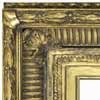
The images above showing various aspects of making the moldings, specifically cutting the coves. The ten foot lengths required some logistical dancing, often moving some machines daily.

First cuts of the cross grain fluting. The molding is top to bottom above. Depending on the wood, flutes might require from 2-3 to 6-7 passes to get a clean flute. The carving was done while the moldings were still in sticks. After assembly, the final molding, on the top of the large cove, and ornamentation was applied.

Frame upside down, showing the corner overlay braces, splines.

I used plywood for the "blind" frame, for greater stability.

Finished, and wrapped awaiting transport.

Until about five years ago, my camera of choice has been a SLR type, film or digital. I've used extensively many styles of machine, from view cameras, press cameras, and twin lens reflex, to the ill-fated APS film cameras. Mostly Nikons. Then, tiring of the bulk and weight, my main machine became the Canon G9, which has seen heavy use, both for studio shots, and work documenting fine art. With the live view LCD, replete with all of the camera settings, it was and is a great tool, akin to a view camera, without the upsidedownesss. Along with the G9, I've always had a series of pocket cameras, Canon usually, not to mention phone cameras.
Although superb at still subjects the G9 is not very good at action, however. Due to that shortcoming, I've been casually looking at DSLRs, though the bulk and weight have bothered me. Mirrorless cameras have intrigued me; small, compact and if they have a viewfinder, it's an EVF. There are several advantages to the EVFs; 100% view, settings info, and the image changes as you apply items like exposure compensation.
After some research, ( a lot of articles and reviews on the interwebs ), I decided on the compact Sony a6000, with the 16-50 kit lens. The above photo shows the camera alongside the G9, and with the 55-210mm telephoto. 3 ounces heavier than the G9, battery and card included, and about a pound and a quarter lighter than a comparable DSLR, like the Nikon D5300 with kit lens, and very compact. As to the superior machine, thats what internet forums are for debating. Personally, I think the EVF is the future, so I chose mirrorless, for the EVF, for the compact light weight.
Image quality in the last few years is superb, regardless of machine. Witness the vast numbers who don't use cameras at all, but rely on the phone for their tool.
The Sony manual is comically concise, in fact almost useless. The machines menus are good, reasonably intuitive, but I also have a lot of camera experience. I recommend buying: The Complete Guide to Sony’s Alpha 6000 Digital BY GARY L. FRIEDMAN AND ROSS WARNER
Here is the website: http://www.friedmanarchives.com/
Ergonomics are good, easy to get a solid hold, with buttons and dials under the thumb or forefinger. Menus are extensive, but pretty accesible as you get used to them. There are 3 memory slots for different setups. I have mine set for JPEG, 1 for RAW +JPEG, and 1 for manual exposure with an off camera flash, done in the Strobist manner, i.e., by feel. Speaking of flash, there is a very nice little feature on the Sony; the pop-up can be held back with a finger for ceiling bounce flash, which I can use to trigger the off camera flash.
Either the EVF or the LCD can be switched off, important as the auto switch sensor is quite sensitive.
Now, the great "religious" war, RAW vs JPEG. Recent lens design has included software as part of the design, correcting vignetting, and barrel and pincushion distortion through software. In camera, this is usually only applied to JPEGs though. Out of the camera, editing software offers lens profiles, but correcting after the fact can still be time consuming. Increasingly, I would rather not spend a lot of time mucking about trying to achieve some mythical perfection, so I'm leaning to JPEG more and more. Some images I want a "negative" in case I do want to work on an image beyond a JPEG, thus RAW+JPEG, but the in camera processing is so good ...
I will add more later; I'm still learning the capabilities and customizations, extensive. But I think the Sony will be a terrific machine; another long term keeper, and apropos the need for speed, it is extremely fast, Sony claiming "fastest" for the class.

After an early snowstorm, with bitter cold, high winds, and lots of snow, packed into ice, we've had a few warm and rainy days, causing the snow to go away. Ok, bye bye snow.

Basswods bereft of leaves. Back left, a maple.

The first light frost of the season. Light also because the dog and I were slow to get out this morning. And, an appropriate response to frost: fire! By the way, basswood makes excellant kindling, which is a good thing as I generate a lot of scrap.

Have a nice October Sunday!

More frost. This photo has been "jacked" up a touch, just playing.


A much better photo from the Apple camera, than the previous one. And not only is Wednesday a full moon but there will be a "Blood Moon", an eclipse of the moon. Starting around 5 AM, ET.
http://www.vogue.com/1415025/apple-design-genius-jonathan-ive
"He sees design schools failing their students by moving away from a foundation in traditional skills. "I think it’s important that we learn how to draw and to make something and to do it directly," he says, "to understand the properties you’re working with by manipulating them and transforming them yourself."


Summer has lingered into early fall with beautiful days and cool nights, and just the start of turning leaves.
Photo from a new camera, iPhone 5s. The latest phones are too big; I'm hoping Apple will come out with a "mini" version of the latest and greatest, though not likely for at least a year and maybe two. The 6 series is attractive as tablet, much less as phone, and would have required changing the way I carry and handle a phone.
Soon, a post on process of some current projects as I start to finally catch up.


The tree roots have grown around the bottle. Tree, Red Mulberry.
"Red mulberry is used locally for fenceposts because the heartwood is relatively durable. Other uses of the wood include farm implements, cooperage, furniture, interior finish, and caskets."
(Martin, Alexander C., Herbert S. Zim, and Arnold L. Nelson. 1961. Mulberry family: Moraceae. In American wildlife and plants. p. 313-314. Dover Publications, New York.)

The tree in fall. Bottle is under the leaves, left side of trunk. Old phone photo.
Google mulberry wood for some images of the beautiful wood.

The tree today.


 Posts
All Comments
Posts
All Comments

 Posted with Blogsy

