9/8/09

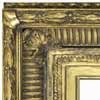
Albert Milch Frame 2

 
An image of the Albert Milch frame, in process. The red areas are where ornaments have been replaced and bole has been applied before laying gold leaf, in the water gilt process. The bench is 13 inches wide. Big frame.

9/7/09

Trashed Redux

 
Another shot from the bog, west of South Bend.


The attraction for "dumpers" is that this area is off a twisting gravel road, hidden from view, by the curves of the road and surrounding woods. Some development is happening in the area; hopefully the bog will survive.

9/6/09

Trashed

 
Looking Down.

Looking Out.

These images are from the same area, at different times, and with much different intent, and focus. I've never quite understood, how some of the most beautiful spots are so routinely trashed. This is a bog, west of South Bend.

8/30/09

NEA

A great quote from Rocco Landesman,  the new head of the National Endowment for the Arts. :

"But actors and artists are part of the real economy. They have real jobs, like working in a steel mill or an auto plant, and they have medical bills and rent to pay and kids to send to college. The arts are tough work. But it's real work, and it counts."

In the interest of full disclosure, I'm still waiting for my, personal, stimulus funds. The check is in the mail?


This is one of my favorite images of this monument, completely off-topic, but I really like this image; gonna start using it more.

8/29/09

Marketing

I enjoy TOP, as well as Kirk Tuck's "A Visual Science Lab". Kirk has written a book on the business aspect of photography, but it probably has a much wider audience; anybody in a small, artisanal business, unless, the current economy is just fine for you.

Personally, I'm not ready to hang up the carving and gilding tools just yet, but I am thinking about it. This is the worst downturn I've seen; several clients have closed their doors, and there is a seismic shift in the whole business, so ...

That's the idea of promoting a book like Kirk's; I haven't gotten my copy yet, but from the interview on TOP, and reading his weblog, I think it will be a good one. Think different, keep moving forward.

Interested, go to TOP, order the book through his link, so Mike Johnston gets a few pennies, at no additional cost to you.

 
Moonrise, Warren Dunes, Michigan.
 
As a side note, some of my posts are going to have pictures of no relevance to the topic at hand. They are there, just because. I like them.

8/27/09

Work, broken hearts, fashion.


Listening to NPR, National Public Radio, catching only part of it, but a conversation about a movie about Vogue magazine. One of the "high", Grace Coddington, willing to continue to have her heart broken, to fall in love with something that won't make it into the magazine, fall in love, fight for it, and move on to the next, when this one falls.

I guess the part I like, is feeling strongly about "art", willing to fight for it. Having some ... conviction, or just having ... ahh, hell, brass balls, put your money where your mouth is, conviction, belief in your own taste; and the willingness to look, and SEE.

More looking and seeing.

Over on TOP, there is a link to an article by Richard B. Woodward, Too Much of a Good Thing. From the article...

"Another factor casting doubt on the authenticity of all these "vintage" Hines is that many look eerily like Rosenblum's own photographs. The Chicago dealer Alan Koppel first pointed out the likeness, to the Santa Fe dealer Andrew Smith at an Association of International Photography Art Dealers show at the New York Hilton in February of 1999. Smith had a gorgeous print of Hine's Three Riveters hanging in his booth. Koppel stopped by and observed that the Rosenblum photographs he had seen and the Hine prints that dealers had bought from the Rosenblums had a "similar tonality—the same clean, hard surface and cold grays.""

Were it not for seeing, not just looking, this may have gone undiscovered. The science and research are very interesting; the timeline of photo papers is significant, but with out a little connoisseurship, this "fraud" may have gone undiscovered.

I'm ambivalent about sympathy for the investors; mostly that they were led by "experts" who were "wrong". Invest some time in seeing, in connoisseurship.  Sour grapes on my part, I admit. Bad me.

8/21/09

True Art History


Tyler Green's "Modern Art Notes" has a very interesting 4 part essay on "Portrait of a Venetian Gentleman".

Combining science and history, an essential element is added, connoisseurship. Seeing, as well.

Very good story.


8/20/09

Albert Milch frame

New to the studio, needing some ornaments and gilding replaced and restored, an Albert Milch frame. I note it due to its extraordinary size. For a 28 x 36 canvas, the frame is 8 inches wide and 4 inches high, karet gold gilt, composition ornaments, early 20th. century.


The verso with labels. The Milch family were dealers and framers in NYC, with some of the family running the galleries and some the framing businesses.

A lovely example of the framers art. Extensively burnished, with the outside coves and ornaments completely burnished.

8/12/09

Art Matters


At Bloomberg.com: Culture Czar Must Say Art Means More Than Money: Jeremy Gerard

I love the line: "to revivify an agency whose greatest achievement in nearly two decades has been merely to survive."


8/3/09

More on Seeing

"Cans, Indianapolis Art Center"

In the New York Times:

http://www.nytimes.com/2009/08/03/arts/design/03abroad.html?_r=1&em

I agree completely with this: "Artists fortunately remind us that there’s in fact no single, correct way to look at any work of art, save for with an open mind and patience. If you have ever gone to a museum with a good artist you probably discovered that they don’t worry so much about what art history books or wall labels tell them is right or wrong, because they’re selfish consumers, freed to look by their own interests."

By MICHAEL KIMMELMAN

7/27/09

On seeing. Two Legged Rocking Chair


I know I have done it; think I "see" something one way, and then actually "see" that it is another. No, not the kind of seeing in actual illusions, more seeing what I think I should see, instead of what is actually there.

How many legs are there in the chair pictured above? How many legs do chairs usually have? I ask, because this chair has, at times been "seen" so differently than I see it, I who created it. The chair, like all art, displays influences from other artists and craft people.

Until recently, I have seen no other rocking chair like this, with two legs. George Nakashima made his famous "Conoid" chair, with two legs. I admit the influence. There is quite a bit of Sam Maloof, and quite a bit of James Krenov, though the Krenovian influence is subtle; more in a way of thinking and working that has influenced all that I do. James Krenov, highly recommended.

I bring this up, because I have noticed that the two leggedness of this chair is overlooked sometimes; the chair "feels" right, although it is a very unusual design.

Just my curmudge for the day.

The Torso Table, an explanation of process, and some art history.


After a picture of this table was posted on another blog, here, there were some "unusual" comments, culminating in a request for a "defense" of this table.

"All artists after all can defend their work, otherwise it's meaningless."

PFUI, art is not defensible, nor should it be, nor can it always be explained. Art is a small expression of the infinite; explanations would seem to diminish it.

I can, however, give some thoughts as to the process involved in the construction of this piece of "functional art".

Why a table? If you have an "old fashioned" in one hand, it would be nice to have a small table at your arm, to place said "old fashioned" on. For those unfamiliar with it, an "old fashioned" is a Bourbon whiskey based cocktail. So, a table.

Having not slept through art history, and being a determined auto-didact, I decided on a caryatid as the support for the table. At the time I was designing this table, I was also reading extensively about Amadeo Modigliani, who carved some caryatids under the influence of Constantin Brancusi. Caryatids are decorative figures used as support for structures. Usually female, either clothed, semi-clothed, or unclothed, there are also male and hermaphrodite versions. I'm fond of the unclothed female form, and it is incredibly weird that I should need to "defend" the use of the female form in art. I am not the first artist to use the female form in art. See Amadeo Modigliani. Very much, Modigliani expressed the infinite.

I am a child of the 20th. century, and like most artists, my art is a melange of influences, built on the foundations of those who preceded me. One of those foundations is the "deconstruction" of form, altering reality. See cubism, abstraction in general, also Modigliani.

Deconstruction, and altering reality to adapt to a new form; I designed the table support to be a torso, another not unusual art form. Each leg represents a section of the torso, viewed from the front. Left leg = left breast, ribs, down into the swell of the hips. Center rear leg = center of the torso, navel, the rise and fall of the belly. Right leg = right breast, ribs and swell of hips. Each leg is "in the round" so there is a lot of stylization in the forms.

The support rails are a bentwood lamination, wherein multiple thin pieces of wood are glued together, clamped over a form, that when dry, maintain the shape of the form. Two of these were glued together to form a "Y" shape.


This photo shows the "Y" shaped "rails" of the table, joined to the legs with floating mortise and tenon construction. The joints are cut while everything is still square, and left unglued so all of the pieces may be carved individually. The top is from several pieces of oak, joined, and as a counterpoint to the very organic base, has some angularity. The edge is chamfered, and stained red, again as a counterpoint to the base. The top rests on the base, which has two protruding dowels to secure the alignment.

The base is glued; final carving as needed, then it is gessoed. Gesso is a traditional product made of whiting, (ground limestone, chalk), hide glue, and water, that dries to a sandable, plaster like material. Polychrome, (paint) is applied to the base, and the top, after staining, gets a rubbed oil finish.

The construction of this table is of conventional and traditional wood working techniques; the polychrome and gesso predates high Egyptian culture. The form is late 20th. century, but based on the pantheon of all the art that preceded it. This is an art historical type explanation, mechanical, as the actual flow and sweep of form, as with all art, is beyond words. At some point, one needs to transcend thought, words, and just look and feel ART.