11/18/10

Autumn

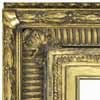
An image from early November, a few years back. Cool, with possible snow this morning, but it has been a very nice fall. That's all.

At Idiotic Hat, an interesting post on thought and memory, specifically memorization.

11/11/10

Veterans Day, Today

 The Soldiers and Sailors Monument, Indianapolis, IN.

Once called Armistice Day, for when The Great War ended, The War to End War. Then, there was another, though some think it was just a continuation.

Civil War Monument, Battell Park, Mishawaka, IN.

11/7/10

Sunday Rant

A some what bedraggled Ken, getting ready to be eBayed by my wife, from her childhood collection.


Just a thought on a Sunday, as I'm listening to an album mentioned on TOP, see the links. I'm very responsive to jazz, like it a lot, but for some reason, I do not seek it out in the way I do classical. I'll have to think about that for a while ... in the mean time, "Ben and Sweets" is a delightful album.

My thought had to do with framing, and specifically the framing of mirrors, and affirmation and power. Most of us look in mirrors a lot ... yet the mirrors are nothing special ... don't you think that the affirmation and power of a really special mirror, one that frames YOU as special, important, Louis XV, sort of person would be important? New marketing program yowzahhh!!!!!

 Stuff I'm working on. The frame would be good for an affirmation of self though, don't you think? Designed as a vertical, kudos, a big bag of them, to any one who notices. Verticallity.

I'm sorry, it's a little tricky, as the image isn't that clear, but the bottom inner "bead", center, is not carved, which adds to the vertical feel.

10/26/10

Bernat Martorell


St. George and the Dragon
Bernat Martorell
The Art Institute of Chicago

One of my favorite paintings. Below, detail showing the sculpted, 3D elements, gilt of course. This painting is a wonderful example of a great 15th. century painter, and his studio, quietly showing all of their repertoire. The carved wooden panel, gilt, and the painting itself, with it's wonderful, "rolling" perspective. Every time I'm in The Art Institute of Chicago, I visit this painting; it is an old friend.


Another detail; note the fly on the bone, and the splatter technique for the dirt and sand.

10/21/10

Works Progress Administration


Another painting in process, top, and a better image of the one in the previous post. The one on top is essentially done, only needing some air brush glazing with egg yolk and water to even the sheen. The one on the bottom needs a little tonal "fussing", but is also, essentially done ... but, they both need the frosting ... the FRAME. I feel such a dinosour, frames, how quaint.

The "dune" painting started from a photo, but has wandered off in directions of it's own. It is somewhat large for me, 12 x 24. The "sunset" is based on an existing watercolor, but it has also wandered off, seeking it's own path I guess. It is dimensionally, 6 x 12. All dimensions are in inches, and height precedes width; customary museum practice. Some picture framers and some wood butchers reverse that ... but they are just wrong. I asked my wife, a former museum registrar, whether the American Association of Museums had set the standard; she laughed, and said no, it came from the "book". Dorothy H. Dudley and others, Museum Registration Methods.

Here, from the Museum of Modern Art, a brief bio of Ms. Dudley.

So, just for the record, height precedes width  ....  OK?

Get it right ... and the bluebird of happiness will do ...   whatever ...  OK?

10/15/10

Work in Progress


One of several egg tempera paintings I'm working on at the moment. Untitled, as of yet, 6"  x  12", on a panel.Traditional gesso.And the photo was done quickly, and is ever so slightly off. Once it has a frame, I will spend the time to photograph it properly.

Loosely based on a watercolor of mine. One of the pleasures of egg tempera for me is the subtle changes that can be rendered by glazing; and the glazing can be done in cross-hatching, scumbling in a color, or even air brush. Sometimes the paint is just "pushed" around. Unlike oils, there is no tendency to produce mud by repeated working of a passage. 

The painting is nicer in person than on the interwebs ...

Addendum to a previous post. Here


I'm pretty sure the last three words on the top line are: "laid to rest". In the bottom line, the last words are? "all their country? wishes blest. I've jacked up the contrast and sharpness for this file. I've thought of doing a rubbing, but I suspect that doing a photo as I did, with a corded flash at a right angle to the stone is just as good. Help would be appreciated; I have several raw files; if there is anybody who reads my meanderings and is interested in this sort of thing.  It's just an itch I feel like scratching. This small cemetery went through a period of neglect, but seems to be being cared for now, and my interest in that bloody war continues unabated.

10/7/10

Modernist frame


Peter Blume, "The Buoy", Art Institute of Chicago


This is an example of the delightful polychrome finishes from the "Modernist" period of the 1940s-50s. They are characterized by broad, but simple moldings, and in lieu of ornaments, textured gesso, followed by washes of polychrome that are rubbed, scrubbed, and abused to achieve some beautiful effects. The textures range from the combing, seen above, splattering, scumbling, and sort of slathering with a palette knife, like impasto knife painting.

The above frame is a touch "loud" for my taste, though I think it works. I'm from that ancient school of framers who wants the frame to enhance rather than announce it's presence. Not that I'm always innocent. Here, though it hides it's freak flag well.

9/30/10

Gesso

The following is a copy of a post on the Picture Framers Grumble, regarding pinholes in gesso:
http://www.thegrumble.com/showthread.php?t=51531

A Peter Blume painting at the Art Institute of Chicago, "The Buoy". Lovely frame.


"Pin Holes, ehh.

Baer, urinating in the gesso jar again? Humph!

Actually, large mammal urine contains urea, which is the compound used by TiteBond to make "liquid hide glue". It suppresses the gel rate. Hide glue and RSG are the same thing, just different glue strengths.

John, your recipe might be on the strong side. I use a ratio of 2 grams glue, dry, to 1 liquid oz. of water. For a 20 oz. jar of gesso, I add a tablespoon of uniodized salt ( the palm of my hand ). Salt is a gel suppressant as well. I've never used urea, as I'm too lazy to go to the drug store and ask the pharmicist if he has any. Baer fails to mention the "secret" aspects of the urine recipe; that it be done in the light of a full moon, shaded by an old oak tree, preferably in a cemetery. The gilders guild says so.

First coat needs to be as thin and "licked out" as possible. Wet sanding, polishing, rubbing, etc. will work, but the first coat is the important one. 1st. coat is always brushed, then subsequent coats can be sprayed. A splash of alcohol, in both the gilder and the gesso helps as well. Alcohol acts as a tension breaker, suppressing bubbles.

The problem with linseed oil is it needs to be emulsified in the gesso; a blender works well. I routinely let my gesso gel, then reheat for use. I used to use a hot plate from a coffee maker, as they heat to around 150 degrees, but now I just use the microwave, after spending some time with a thermometer figuring out times and power."

Addenda:

"Wet sanding, polishing, rubbing, etc. will work, but the first coat is the important one" above, is how to deal with pinholes after the fact. The first coat is where pinholes develop and then show through later coats.

9/3/10

Civil War Monuments


Another monument of the Civil War. This is from The Mt. Zion Cemetary, Bertrand Township, Michigan, south western Michigan.

I need to return, as there is an inscription that I did not notice til looking at the photo.

8/18/10

A Master Printer


Over on TOP, here part1, and part 2. A two part article by the Photographer, Peter Turnley.

From the press release:
"Today, Mike Johnstonʼs The Online Photographer (TOP), a photography news and
discussion website for photographers, has published a significant original article. Itʼs a
profile of Voja Mitrovic (“Voja” is pronounced “Voya”), the darkroom master who printed
for Cartier-Bresson, Koudelka, Sebastiao Salgado, Werner Bischof, René Burri, Marc
Riboud, Robert Doisneau, Edouard Boubat, Man Ray, Helmut Newton, Raymond Depardon,
Bruno Barbey, Jean Gaumy, Frederic Brenner, Max Vadukul, and Peter Lindbergh
to name a few."

The descriptions of the compexities of B&W printing are wonderful, and as usual, the commentary is very good. 

In my youth I spent a lot of time in wet darkrooms, so I have a lot of respect for the skills involved.

8/10/10

A new design?

A new design, sort of a curled leaf pattern, but also based on the stylization of the various patterns sometimes called after the painter, Childe Hassam.

These are another pair of the "Hassam" style frames; flat panels, a geometric quality to the moldings, with relatively simple patterns, though some get elaborate, with carved patterns on various steps of the molding. All three are "organic" in basis, though the middle is very stylized.

The top image, with it's burnished gold areas, is what I was striving for, though I'm not sure that that is that great.

The idea will never work if it isn't turned into something actual, and it may fail, or not. Time, a little time is needed. For me, the process of making something, the need to focus on the physical, makes it difficult for me to see with a clear and critical eye about a design, though there is a clear, critical eye about the technical aspects. Aesthetic vs technical.

7/29/10

The Hard Part, or back to our regular programming.


The sanding, scraping, refining part. Frames are "white" at this point, gesso applications are done; drying is done ... and now to the finger splitting, mind melting part. Sanding smooth, refining edges and curves, and making ready for the FINISH.

I use a combination of carving tools, small rifflers of various shape, and various scrapers, as well as various sanding blocks, various shapes. In the gessoing process, edges get soft, lines get filled. The French make tools specifically for the carving of gesso, usually in conjunction with carving in general ... me, I just use what I have, the small carving tools, scrapers and rifflers. 

(riffler |ˈriflər| noun
a narrow elongated tool with a curved file surface at each end, used in filing concave surfaces.
ORIGIN late 18th cent.: from French rifloir, from Old French rifler ‘to scrape.’

It's those French again. Wonderful place, France; I've been fortunate to spend a few weeks in France, both Paris and  La France Profond, the country side, Provence actually. Waiters still sneer at my French, but I do get what I ordered. I take that as a great compliment. Any place that has as much variety in wine and cheese, and also has restaurants devoted to nothing more than "snails", Escargot ( Snails, broiled in a combination of butter, garlic, and parsley, in the shell) ... well, that is a good thing. In the photo below, please note that the snail is gilt. One of those "small" regrets, is that I didn't find this restaurant until we were leaving, and that was on a Sunday, and France, being Catholic; many businesses are closed. There are regional variations in the recipe; after all, it is France.


Mean while, back at the ranch,  where the bleeding, split fingers are. In the winter, the back and forth and pressure of sanding tends to aggravate the skin splitting. 

Any way, the idea is to clean, refine and smooth the edges and surfaces.To make edges crisp, and everything ready for the bole.

7/12/10

End of an Era

TdF

Yesterday, truely the passimg of an era.
I'm a long time fan of cycling, and enjoy the TdF a lot. One of the more poignant moments for me was in 96, when Lance abandoned the tour on a fog and mist enshrouded mountain side; took his number off, and drifted back down the mountain, into the fog, none of us knowing the pain he felt was the cancer riddleing him. He survived to become the champion of champions. Today was sad, though handled with grace and humour, through the pain. After his third crash, fourth in this tour, he stood, hands on hips, looking at his bike, then mounted and "sat up", knowing that the tour he had dominated completely, finally had turned on hin.  I hope that he will finish, help his team, and enjoy  "Le grand boucle" as just a "rider".

Mural by Shepard Fairey, Photo uncredited.